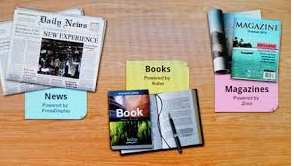
Originally, I wanted to discuss how physical books would soon be a thing of the past, and that newspapers will no longer be in physical demand, and that magazines in a physical form are beginning to fade, until my classmates begged to differ. In 2020, I am happy to report that there is an open market for preference. A printed copy of a book is still in high demand. According to http://www.statista.com 695 milliion books were sold in the US in 2019. Newspapers in the US sold over 26 million copies daily in 2019, not much of decline at all. Although, after conducting additional research there is still an ongoing debate on whether or not there has been a decline in the sell of newspapers and this is mainly due to the introduction of optional delivery of news based on preference, such as thru the internet and/or via the television.(journalism.com) Last but not least, magazines appear to be a force to be reckon with. With whopping sales of over 373 million sold in 2018, (www.foliomag.com)I believe it is safe to say that they have attracted a loyal audience.
Books, Newspapers and Magazines are all ways to engage in information. However, there are some slight differences. Books have a variety of entertainment and interest to read both fiction and nonfiction and typically does not have a lot of pictures, whereas the newspaper has local and worldwide news that is serious and more interesting to read which may also include advertisements and the magazine has longer articles on a variety of subjects such as fashion, sports, health an some things that aren’t so serious.
Chapters 3, 4, & 5 covered the importance of media and how the impact of evolution has hindered some growth forcing the need for modifications. Many media outlets have opted to use advertisement and electronic versions to balance costs and to enhance there ability to become a multi news outlet and to continue to meet the needs of all generations. Of course these modifications do not come without operation costs, therefore, the rate hike has been passed down to the consumer. Nevertheless, the numbers that were provided above show that consumers are going to pay the additional up charge for literature and a reliable news source which in turn promises an appetite of consumers for the ongoing demand for books, newspapers and magazines.
 Tabreille's Thoughts and Views